Daily steps and mortality

10,000 Steps Is a Marketing Number, Not a Science Number

If you wear a watch or a band, you know the picture: it’s eleven at night, you’re two thousand steps short, so you walk laps around your building. The watch sets off fireworks and you feel like you’ve done your duty for the day. That number — 10,000 — you’ve assumed is a scientific standard. It isn’t. It was a slogan invented in 1965 by a Japanese clock company to sell pedometers, and at the time there was no research behind it at all. The science only got bolted on decades later. ...
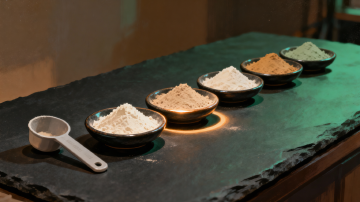
Protein powder comparison

Whey vs Soy vs Casein vs Pea: Why the "Best Protein" Ranking Keeps Changing

Search “which protein powder is best” and you’ll get a different answer from every page. Whey is the king. No, casein for the overnight window. No, soy is just as good and cheaper. No, pea, because dairy wrecks your gut. Here’s why the arguments never resolve: they’re ranking proteins on a measurement that changes depending on how long you watch. Run a muscle-protein-synthesis test for three hours after a scoop and whey wins. Run the same test for six hours and casein catches up. Measure what actually leaves your gut and gets retained, and pea ties milk protein outright. Every one of those studies is real, well-conducted, and correct. They just answer different questions. ...

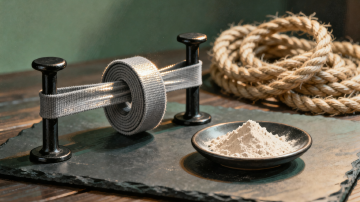
Collagen and tendon loading

Collagen for Tendons After 40: The Supplement That Only Works With Load

Walk down any supplement aisle and collagen has taken over half the shelf. The pitch is always the same: your collagen declines after 40, so take this and get it back. Skin, hair, nails, joints, “glow” — one powder promising everything. Here’s what that pitch quietly leaves out. Collagen is not one thing with one effect. The strongest evidence for it is narrow, specific, and comes with conditions attached. The evidence for the thing people actually buy it for — bigger muscles — is not just weak, it’s negative. ...

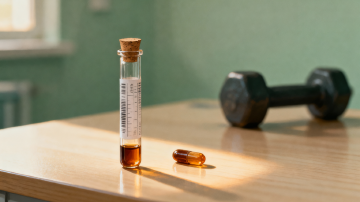
A blood test tube and a small amber capsule under warm light, with a shadowed dumbbell behind

Vitamin D After 40: The Muscle Number Your Blood Test Hides

There’s a number hiding on the blood panel most men over 40 skip reading. It’s not cholesterol, not HbA1c, not testosterone. It’s vitamin D — and if it’s low, it’s quietly doing more damage to your muscle than you think. Here’s the catch, and it’s the entire point of this post: vitamin D is not a supplement that makes you stronger. It’s a deficiency marker. Below a threshold it’s associated with weaker muscles and worse physical function. Above that threshold, taking more does almost nothing. The supplement industry wants you to forget that distinction, because “take this to get jacked” sells better than “check this one number so you know you’re not deficient.” ...

A quiet body-awareness practice — sensing movement from the inside, not forcing it

You Lift, But You Don't Feel Your Body: Why Somatic Awareness Is the Missing Layer

Here’s a quiet confession most lifters over 40 would never say out loud: they’ve spent thousands of hours making their body do things, and almost no hours learning to feel what it’s telling them. Strength is output. You know output — sets, reps, load, progressive overload. But there’s a second signal you’ve been ignoring, and it’s the one your body uses to keep you out of pain, to tell you when to push and when to back off, to keep one bad rep from becoming a six-month injury. ...

A lone barbell in dim light, at rest, nervous system recovery

CNS Fatigue: What It Is, the Symptoms, and How Long Recovery Takes

Here’s a feeling every lifter over 40 knows, even if they’ve never named it. You show up. Your muscles don’t even hurt. Your warm-up feels fine. Then you get under a bar that you moved easily last week — and it feels like it’s bolted to the floor. Your coordination is slightly off. Your drive is gone. You grind through it anyway, because that’s what men do, and the number still won’t budge. ...

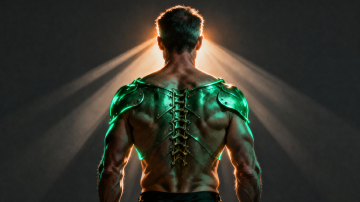
Muscle as metabolic armor — a strong back and shoulders in near-silhouette, jade rim light

Muscle Is Metabolic Armor, Not Vanity

You’ve been told muscle is about how you look: bigger arms, a wider chest, something to show for the gym. That framing has it exactly backwards. Skeletal muscle is the largest metabolic organ most men never think about. It’s where your body disposes of glucose after a meal. It’s a gland that secretes signals affecting your brain, your immune system, and how fast you age. Lose it, and the diseases of midlife — type 2 diabetes, frailty, dependence — arrive years early. ...

Core strength for desk workers — a worker stabilized against the chair that deconditions the spine

Core Strength for Desk Workers: Your Lower Back Pays for Every Hour You Sit

Every hour at a desk, a quiet transaction happens inside your lower back. The muscles built to hold your spine stable clock out, and the passive structures — the discs and ligaments that were never meant to do that job — get stuck with the bill. That is the entire story of desk-worker back pain in one sentence, and almost nobody gets it told to them straight. They’re told to “sit up straight” or buy a lumbar cushion or do crunches for a six-pack. None of it addresses what’s actually going wrong. ...

A barbell resting on the floor in soft shadow, recovery week

Deload: The Recovery Week You Keep Skipping

There’s a paradox every lifter eventually runs into, and men over 40 hit it sooner than most. You train consistently. Your effort is real. And then the numbers stop moving — sometimes for weeks. Most people respond by training harder. More sets, more weight, less rest. And that’s the exact move that keeps them stuck. The problem isn’t a lack of effort. It’s too much effort with no planned break from it. A deload — deliberately backing off for one week — is the most commonly skipped tool in strength training, and among the most effective. Because strength doesn’t come from the work itself. It comes from what the work triggers once you stop and let it happen. ...

Mobility after 40 — range of motion trained as a skill

Stiff Isn't Inevitable: Mobility After 40 Is a Skill, Not a Death Sentence

Sometime around forty, men start describing their own bodies the way they’d describe the rain — “I’m just stiff now.” It’s said with the resignation of a weather report, as if stiffness were a thing that happened to them rather than a thing they stopped doing. That one sentence contains an entire theory of aging, and it’s wrong. Stiffness is not a property of getting older. It’s the consequence of a skill — moving through a full range of motion — that quietly got dropped from the training menu the moment the schedule got busy. ...